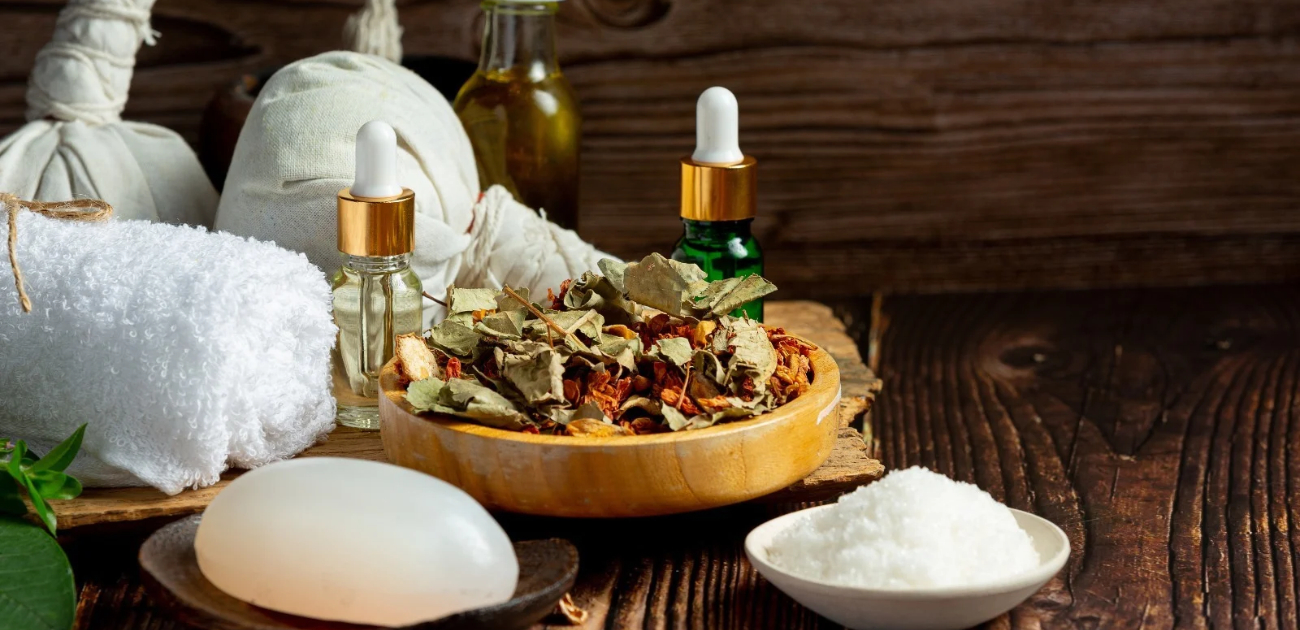
Kizhi is a traditional Ayurvedic therapy that uses warm herbal poultices, known as Kizhi, to provide targeted therapeutic care. Depending on the individual’s condition and Ayurvedic assessment, the poultices may contain medicinal leaves, herbal powders, special rice or other prescribed ingredients. At Al Manar Ayurvedic Centre in Sharjah, Kizhi therapy is selected and administered according to the individual’s needs.
What Is Kizhi Treatment?
Kizhi, also known as Pinda Sweda, is an Ayurvedic therapy in which specially prepared herbal bundles are warmed and gently applied to specific areas of the body or across the body.
The combination of therapeutic heat, herbal ingredients and controlled application makes Kizhi a commonly used Ayurvedic therapy for supporting mobility, easing muscular tension and managing certain musculoskeletal concerns.
The type of Kizhi, ingredients used, temperature and method of application can vary according to the individual’s condition.
Types of Kizhi Treatments
1. Ela Kizhi
Ela Kizhi uses medicinal leaves and herbal ingredients prepared into warm boluses. It is traditionally used as part of Ayurvedic care for joint stiffness, muscular discomfort and certain musculoskeletal conditions.
2. Podi Kizhi
Podi Kizhi uses specially selected herbal powders packed into cloth boluses. The warmed boluses are applied to targeted areas as prescribed by the Ayurvedic physician.
3. Njavara Kizhi
Njavara Kizhi uses special medicinal rice prepared with milk and herbal decoctions. It is traditionally associated with nourishment, strengthening and rejuvenation and may be recommended depending on the individual’s Ayurvedic assessment.
Potential Benefits of Kizhi Therapy
Depending on the type of Kizhi and the individual’s condition, Ayurvedic practitioners may use this therapy as part of a treatment plan for:
- Joint stiffness and discomfort
- Muscular tension
- Reduced mobility
- Arthritis-related symptoms
- Spondylitis-related discomfort
- Back and neck discomfort
- Muscle weakness
- Certain rehabilitation programmes
- General relaxation and rejuvenation
How Does Kizhi Treatment Work?
You can make this a 4-step section:
1. Ayurvedic assessment
The practitioner evaluates the individual’s condition and determines whether Kizhi is appropriate.
2. Preparation of the Kizhi
The ingredients are selected according to the prescribed therapy and prepared into cloth boluses.
3. Warming the boluses
The Kizhi is warmed using the appropriate herbal preparation or medicated oil.
4. Therapeutic application
The warm boluses are applied to selected areas using controlled movements and techniques prescribed by the Ayurvedic practitioner.
Who May Benefit From Kizhi?
Kizhi may be considered as part of an Ayurvedic treatment plan for people experiencing:
- Joint stiffness
- Muscle discomfort
- Back or neck discomfort
- Reduced flexibility
- Certain arthritis-related symptoms
- Musculoskeletal conditions
- Muscle weakness
- General physical fatigue
Why Choose Al Manar Ayurvedic Centre for Kizhi?
Traditional Ayurvedic Approach
Experience Ayurvedic therapies based on traditional principles with personalised treatment planning.
Experienced Ayurveda Doctors
Al Manar’s website currently lists BAMS-qualified Ayurveda practitioners, including Dr. Dileep K Nambiar, Dr. Anupama Dileep and Dr. Kavitha Krishna. (Al Manar Ayurvedic Center)
Personalised Treatment
The choice of Kizhi and other therapies can be based on the individual’s condition and Ayurvedic assessment.
Convenient Location in Sharjah
Al Manar Ayurvedic Centre is located in Sharjah, UAE, making the page particularly relevant for users searching for Ayurvedic treatment in Sharjah and the wider UAE. (Al Manar Ayurvedic Center)